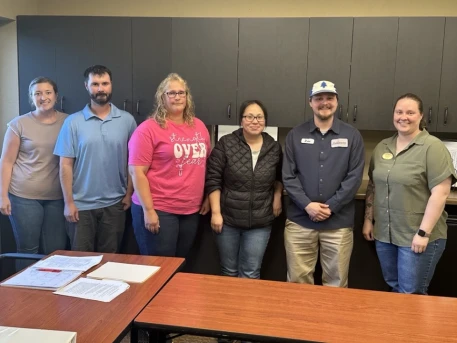
A look inside the rigorous training program that helps Sargento employees earn their grading licenses and protect product quality from warehouse to package.
The Art and Science of Cheese Grading
The Cheese Grader program is a rigorous, two-year, hands-on training program that helps Sargento employees earn their Wisconsin cheese grading license while building a deep understanding of cheese quality, flavor, texture, aging, and supplier standards.
The process of earning a cheese grader license involves more than preparing for an exam. It is about creating subject matter experts who help protect product quality from warehouse to package, making sure cheese is ready for Sargento products and meets the standards consumers expect.
 “It’s a two-year program where employees take four different classes at UW-Madison at Babcock Hall,” said Dan Lessuise, Supplier Quality Supervisor in Plymouth. “Usually, the classes are about a weeklong.”
Along with taking classes at Babcock Hall, employees also participate in two years of hands-on training with Dan or Kyle Koll, Senior Supplier Quality Manager. The group typically meets every other week to pull cheese from the cooler, grade it together and talk through everything from supplier differences to the way cheese develops from mild to extra sharp.
“We train the graders not only in the facility where they’ll be working, but across all of our facilities,” said Kyle.
Trainees are not just learning the foundation they need to earn their American cheese grading license, which includes cheeses like cheddar, Colby and Monterey Jack. They are also learning how many different cheeses are made, what defects can show up, and what is acceptable to go into a package and what is not.
That means understanding products and processes across locations.
“Hilbert has wonderful new technologies, so it’s really getting these individuals comfortable with understanding how all these cheeses are made, what defects might be with some of these cheeses, and what’s acceptable to go into a package and what’s not,” said Kyle.
The depth of training for Cheese Graders matters because they help determine when cheese is ready to be converted into slices, sticks, shreds or snacks, and when it needs more time. They look at appearance, body and texture, flavor, aroma and storage temperature, all of which can affect the aging process and the final customer experience.
“Flavor is king,” Kyle said. “But if we can’t get it into a package, it’s not good.”
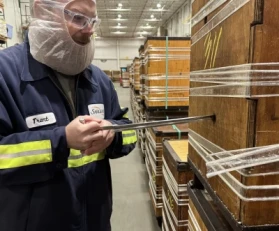 After about two years of training, employees take a written exam followed by an organoleptic exam, where they evaluate cheese through the senses. Dan and Kyle work with trainees leading up to the exam to make sure they are confident, prepared and ready to succeed.
Dan has a lot to be proud of as his first year as the program lead.
“Everybody passed, and that makes me feel good,” Dan said. “There was a lot of pressure because Kyle did such a great job with the program, and Dennis (Butters) and Steve (Kappellin) before him. But I was really happy with everybody. They took it seriously, and it’s a lot easier working with people who have that much passion for cheese and are eager to learn.”
Today, Sargento has 24 licensed cheese graders across the organization, including plant graders and corporate graders who support the outside warehouse program. As the program continues to grow, one thing remains clear: cheese grading is both technical and deeply sensory. It takes practice, curiosity and a strong palate to notice the details most people would miss, and it helps ensure every slice, shred and snack delivers on quality.